On Chlorine
The description of chlorine in Wikipedia includes: "Chlorine is a powerful oxident and is used in bleaching and disinfectants." This is why it is used by municipalities to kill off dangerous and potentially harmful contaminants in the water.
A Basic Element of Life
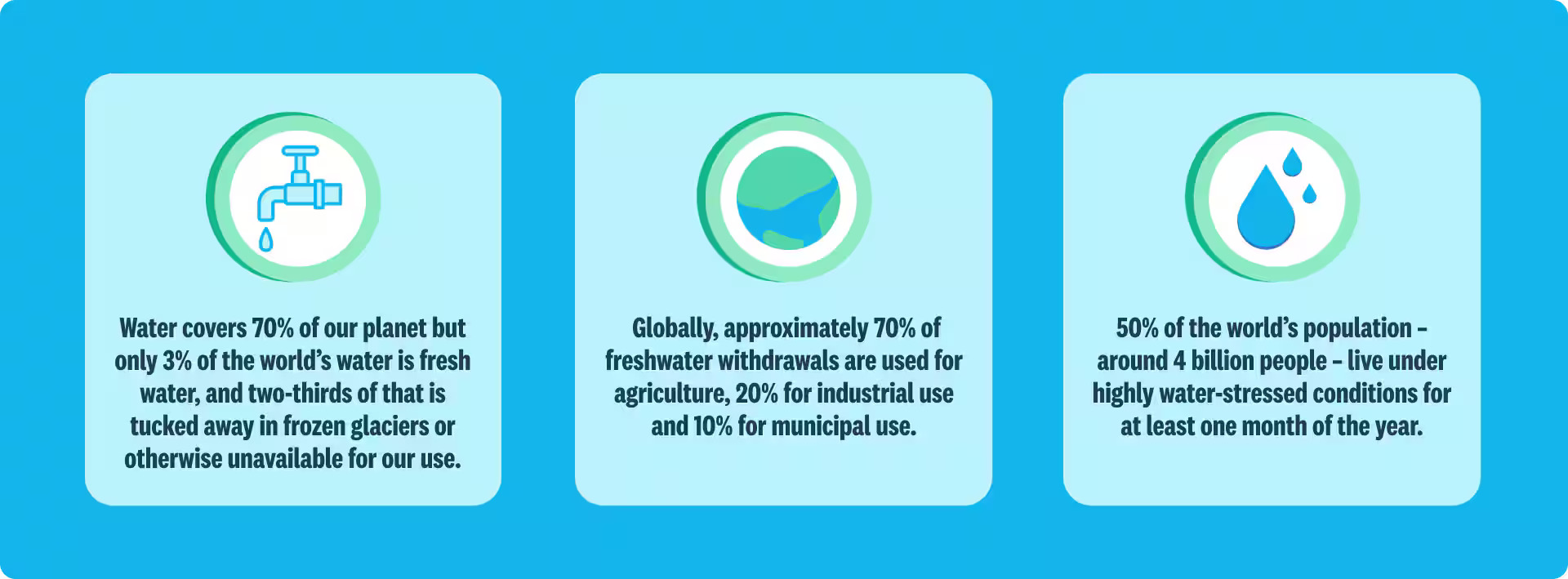
The web site chlorine.org.uk points out: Chlorine is among the most abundant of Nature's elements, and combines with other elements to sustain life and the natural processes that have made up our environment for thousands of years. Chlorine is found in the Earth itself and, as salt, in the seas which cover seven tenths of the planet. It is fundamental to the life of plants and animals. and "Naturally occurring chlorine compounds are found in our blood, skin, teeth and, in the form of hydrochloric acid, in our digestive system." and "Worldwide, waterborne diseases kill over 25,000 people each day. Drinking water chlorination is one of the most widely used methods to safeguard drinking water supplies."
Sensibility
Like many things in life, chlorine has its uses. It can be tremendously helpful or very dangerous. At friendsofwater.com we don't think this is a complicated question. We're pretty glad that nasty bugs aren't reaching us through our water supplies. The spread of cholera for example, can be stopped by disinfecting our water supplies with chlorine. It is arguable that the disinfecting could be done by less dangerous chemicals, but some attempts at alternatives have proven to have other dangerous effects.
But friends - that doesn't mean that it is a good idea to drink or absorb chlorine through your drinking, shower and bath water, and from the air as it released when you shower. Free chlorine is a poison appropriately used to kill living things. Drinking it, and absorbing it though the air and water in showering and bathing seems like a bad idea to us.
Study Suggests Chlorine Could Cause Cancer
A new study published in the November 2006 issue of the American Journal of Epidemiology has reported a link between exposure to chlorinated water and an increased risk of bladder cancer. According to researchers, ingestion of, and bathing, showering, and swimming in chlorinated water can all lead to increased incidence of cancer. The study of the Municipal Institute of Medical Research in Barcelona, Spain, found that “long-term THM exposure was associated with a twofold bladder cancer risk” in households with high levels (50 or more micrograms per liter) of THM. (THMs, or trihalomethanes, are chemical by-products of chlorination.) Researchers discovered that these chemicals invade the human body through ingestion of water, by inhalation and dermal absorption. They also believe that THM that is absorbed or inhaled into the body does not go through a detoxification process in the liver, which may make the chemical much more dangerous in those situations. The results of that study showed that drinking highly chlorinated water raised the cancer risk by 35 percent and that swimming in chlorinated pools raised the risk by 57 percent. Those who took longer showers and baths in THM-contaminated water saw their risk of bladder cancer increase 83 percent. See the summary at Chlorine Study. |
EPA Does Not Classify Chlorine as a Carcinogen
Chlorine is not classified as a carcinogen by the EPA, and chlorine levels are controlled in drinking water at levels the EPA deems safe. The American Chemical Council, Chlorine Chemistry Division, has emphasized that the chlorine levels in drinking water are regulated far below those that would relate to any dangerous chemical characteristics. The American Chemical Council, Chlorine Chemistry Division informs us that the EPA exhaustively reviewed the scientific literature and considered the input from extensive public comment periods when it established its standards - standards that are set at levels determined not to have any adverse health impact.
The EPA requires that drinking water leaving a water treatment plant contains a residual chlorine level of not more than 4 parts per million and that drinking water at the tap have a measurable level of chlorine. This is to kill any pathogens entering into the drinking water during its journey from the treatment plant to the tap.
There are scientific studies that question these results however. As we have noted, the disinfecting that chlorine does is important. To read more about possible connections between chlorine and cancer, here is an article from the 1992 Science News.
If you would like to remove chlorine from your shower, bath and drinking water, our filters can do that.
We've seen material that suggests a link to cancer isn't proven. And we've seen studies that do suggest a link. You make your own decision.
Heart Health
There have also been studies and medical practicioners who have reached the conclusion that chlorine was not only a cause of heart attack and stroke by the leading cause. They say it is the main cause of arterial plaques, which are the leading cause of heart attacks.
Learn more at Heart & Chlorine.
Not Just Drinking Water
As much as 2/3 of the chlorine we absorb is from showering, where we can absorb it from the water and from the chlorine gas released into the air. The EPA has stated that every household in the US has elevated levels of chloroform in the air due to chlorine from showering water.
For information about fluoride in drinking water: No Fluoride.
For more information about household water and filters: Water Filters.
For more information about shower and bath filters: Shower Filtering.
For more information about pool and natural pond filters: Pool Filters.
|