April 22, Earth Day 2007
Earth Day greetings to our ezine subscribers around the world - Australia, Canada,Pakistan, India, Indonesia, United Arab Emirates, Tajikistan, Saudi Arabia, China, New Zealand, Mexico, Uganda, Kenya, Ghana, United Kingdom, Ireland, France,Austria, Bulgaria, Brazil, Uruguay, Chile, Peru, Spain, Portugal, United States, South Africa, Myanmar, Malaysia, Thailand and the Philippines. We hope this issue of The Waterfall will keep you informed about Earth Day 2007 and inspire you to take part wherever you are. This issue provides our plea to readers to stop drinking bottled water, some history about Earth Day, comprehensive links, and a special Earth Day Offer to ezine readers.
‘Earth Day’ is a name used by two different observances held annually in the spring (northern hemisphere). Both are intended to inspire awareness of and appreciation for the earth's environment. March 22nd, the Vernal Equinox, and April 22nd are Earth Day observances around the world. We have compiled a Resource Column to link you with the best resources and information about Earth Day observances, history, events & activities and major initiatives. The leading source is www.earthday.net the home of all international initiatives and events. There are more links on this site to take you to where you might want to go!
1970 - Save Earth!
Earth Day was first celebrated in 1970 on college campuses across teh United States. Environmental awareness had been growing in the mid-to-late 60’s in the
U.S. as had the anti-war demonstrations on campuses. It was a unique time in American history – a time for brave and radical ideas for change and for peace. Over the years Earth Day activities have become simple and easy to take steps to improve the Earth’s wellness, and therefore, our own.
2007 - Save Earth! Time to stop buying bottled water.
This year you can simply use energy saving light bulbs, turn your heat down a degree, buy recycled products, and take mass transit to have a real and positive impact on the earth. Many of the sites we’ve listed in the Resource Column can help you take these steps. The links to international sites will provide you with country-specific actions to take.
If you are drinking bottled water please stop today! Please buy a great water filter – preferably from us, but just do it now! You can get an amazing whole house filter or undercounter filter to eliminate all the scuzzy stuff and give you safe, pure and great tasting water. Then use a glass, metal or safe plastic bottle to carry your water around with you when you need it.
The very well-respected and internationally acclaimed National Geographic web site provides the following information which we feel says it all: www.thegreenguide.com:
Americans spend more than $10,000 a minute for something that is readily available for free: water. Why do we shell out from 240 to over 10,000 times more per gallon for bottled water than we do for tap water? Perhaps we've given in to the marketing and advertising hype that bottled water comes from pristine springs and lakes. Or maybe because of the taste or the perception that bottled water is better regulated, safer or purer than tap water. However, according to government and industry estimates, about one fourth of bottled water is bottled tap water (sometimes, but not always, with additional treatment).
In 1999, the Natural Resources Defense Council (NRDC) finished a four-year study of the bottled water industry. Some of the issues the organization looked at were bacterial and chemical contamination; federal and state programs governing bottled water safety and testing; and sources of bottled water. Their results were published in an in-depth report available at www.nrdc.org/water/drinking/bw/bwinx.asp.
Tap water is often better regulated than bottled water and has to meet more stringent standards at both the federal and local levels. Cities must test their water for chemical contaminants at least once a quarter, but bottlers are only required to test annually. While the US Food and Drug Administration does have bottled water standards in place, these are not nearly as demanding as those for tap water. According to the NRDC, 60 to 70 percent of the bottle water sold in the
US is exempt from FDA's rules because these regulations do not apply to water packaged and sold within the same state. The International Bottled Water Association (IBWA) argues, however, that FDA regulation covers all bottled water since the components involved - packaging, ingredients and industrial facilities - must comply. The main point is probably that among the thousand bottles tested by the NRDC, about one-fifth contained chemicals such as toluene, xylene, or styrene, known or possible carcinogens and neurotoxins.
One of the more surprising findings from the study is that a city's tap water cannot have any E. coli or fecal coliform bacteria, while bottled water is allowed a certain amount of these bacteria. In addition, most cities' tap water must be tested for Cryptosporidium or Giardia, common water pathogens that can cause intestinal problems, including diarrhea. In contrast, bottled water companies are not required to conduct these tests. City tap water must also be filtered and disinfected, but there are no federal filtration or disinfection requirements for bottled water (these requirements are delegated at the state level, but many states do not have meaningful programs in place). Tap water must also meet standards for toxic chemicals such as phthalates (hormone disruptors that can leach from some plastics), but the bottled water industry is exempt from these regulations.
Lastly, many people reuse disposable PET plastic bottles. A study published in the Canadian Journal of Public Health in November 2002 confirms reused water bottles make good breeding grounds for bacteria since thorough cleaning is difficult. An Italian study showed the amount of DEHP, an endocrine-disrupting phthalate and a probable human carcinogen, in bottled spring water was found to increase after 9 months of storage in a PET bottle. However, it is unclear whether the levels detected could harm people drinking the water.
Many of our readers and customers are concerned about their health and the effects of unfiltered tap water and contaminants in bottled water. Usually water is bottled in plastic packaging. The plastic bottles popularly used are made of petroleum, a non-renewable resource that requires new fossil reserves to be extracted all the time. By choosing to drink filtered tap water, we can conserve this valuable resource and reduce our dependence on oil. The plastic manufacturing process is also associated with toxic byproducts, such as styrene and benzene, which are released in the air and cause not only pollution, but respiratory problems and may cause cancers as well.
Most bottles will be incinerated or will end up in our already overcrowded landfills. The World Wildlife Fund estimates that about 1.5 million tons of plastic are used worldwide to make water bottles. According to the Environmental Protection Agency, plastics are the fourth largest category of municipal solid waste. See more on this story in the news column to your right.
Obtaining water from an underground pipe is more energy efficient and uses far fewer natural resources than bottled water because of the transportation of bottles by ships around the globe and in trucks around our countries. Besides consuming non-renewable natural resources, such as petroleum, their transport also contributes to pollution, noise and overcrowded highways and streets.
Stop Buying Bottled Water NOW!
"Anytime you buy spring water marketed by the big companies, you're supporting the lowering of lakes and rivers around the spring," says Jim Olson, lawyer for Michigan Citizens for Water Conservation (MCWC). Ice Mountain, owned by Nestlé, had pumped 210 million gallons (or 400 gallons a minute) annually from a spring near Mecosta until a judge ordered them to stop last December. Following an appeal, they are now pumping 250 gallons a minute. At the original rate, Dead Stream, fed by the spring, would experience a 24-39 percent reduction in flow, and at two lakes water levels would drop 3-6 inches, according to David Hyndman, Ph. D., a local hydrogeologist. Dr. Hyndman also notes that a projected drop of two inches in water level would stop Great Northern pike from spawning on a stretch of Dead Stream, dry out wetlands and kill off indigenous peat. "And there has already been a reduction in flow and water levels," says Terry Swier, president of MCWC.
Michigan's legislature is now considering a comprehensive water-protection strategy that would restrict withdrawals.
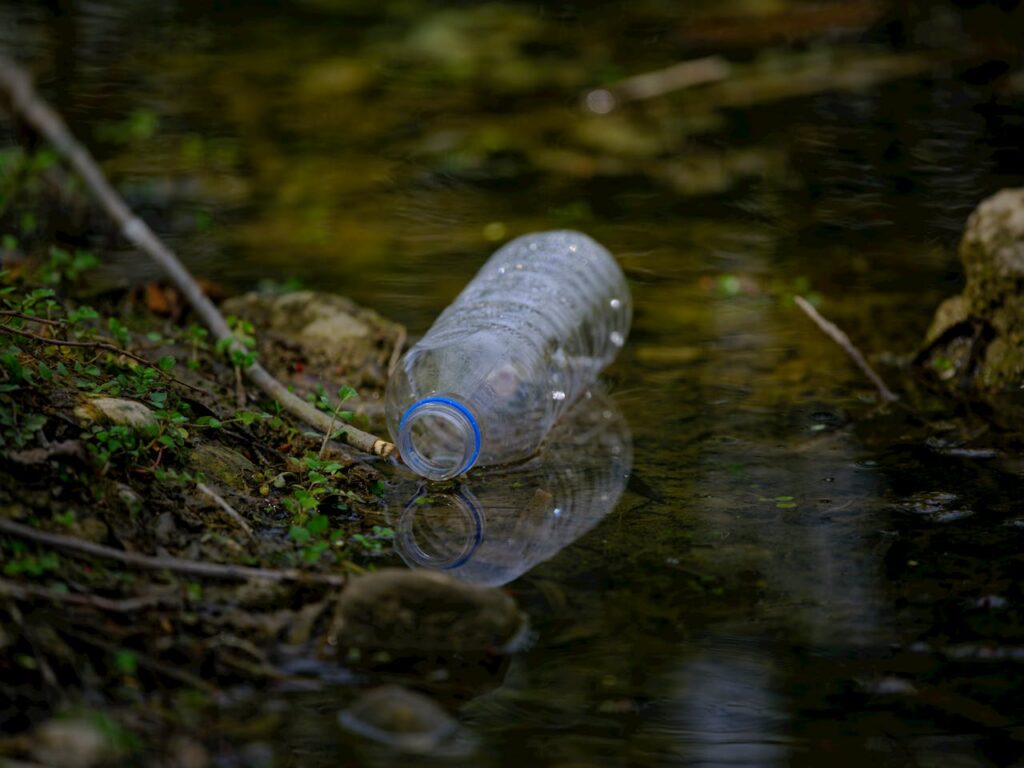
In addition to such environmental harm in watersheds, bottled water causes more water to be used in making bottles. Producing one kilogram of PET [#1] plastic requires 17.5 kg of water and results in air emissions of hydrocarbons, sulfur oxides, carbon monoxide, nitrogen oxides and carbon dioxide. And non-recycled plastic bottles can wind up right back in our watershed's streams and lakes, like salmon returning to spawn, in ever greater numbers.
Bottled water is frequently not as healthy as many manufacturers' marketing claims depict: In
India, where sales increase 50 percent annually, recent testing found pesticides in some bottled waters. NRDC found the neurotoxins toluene and xylene and the possible carcinogen and neurotoxin styrene among other toxins in close to one fifth of the 103 bottled waters they tested in the U.S. Unhealthy chemicals can leach from plastic bottles into our water as well. (see National Geographic’s The Green Guide for more details at "Plastic Water Bottles").
We hope that wherever you are you find the time to celebrate Earth Day in some small or large way and that our publication, website and store support you in your efforts.
Best regards, Tim and Corinne Hickey, Co-founders of www.friendsofwater.com.